- Get pro-level control from your gear.
- End MIDI confusion for good.
- Understand essential MIDI concepts instantly.
- Build powerful MIDI workflows fast.
- Unlock your rig’s full creative potential now.
Master MIDI for Guitar in 2 Hours!
(even if you’ve never touched MIDI before)
Or get your money back!
Enroll Now
From the team behind:

Jason
Richard Oliver’s MIDI course is absolutely brilliant. It gives you all the information you need to start - or level up - your MIDI game

Ricky
I am very pleased by how enjoyable this course was and how inspired I feel

J Moss
No waffle, just solid guidance that actually works. By the end, you’ll feel like a Jedi Master of MIDI
Picture this:
You’re halfway through your best song, building to that epic guitar solo you’ve rehearsed a hundred times. The crowd is locked in. This is your moment.But instead of nailing that solo...You’re hunched over your pedalboard like you’re defusing a bomb.
Tap. Miss the delay. Stomp. Wrong reverb. Furiously Scramble.
Is the fuzz accidentally on again?
By the time you look up, you’ve blown the solo. Again. The crowd starts looking down at their phones.
Your bandmates are shooting you that look... again.
Sound familiar?
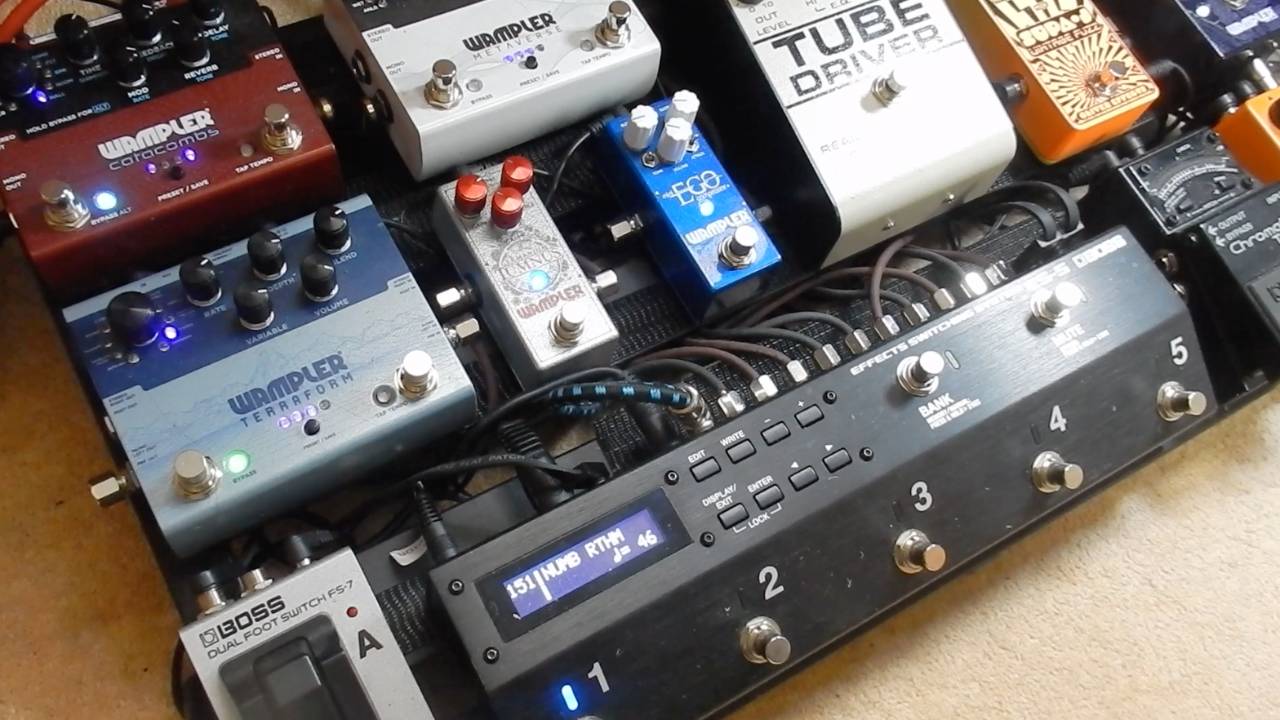
Or maybe you’re not even gigging yet...You’re home, recording that perfect take, and you need to switch from dotted-eighth delay to quarter note, dial in more feedback, swap your spring reverb for plate, hit the Tube Screamer, AND change your amp to the lead channel all at the same time.
All for one song section. All perfectly timed.
But you’ve only got two hands and ten pedals. So you either record it in pieces (killing the vibe) or settle for “close enough” (killing your vision).
You’ve Got the Gear. You’ve Got the Skills. So Why Are You Held Back By Your Own Equipment?
Here’s what nobody talks about:
Most guitarists who’ve been playing 10+ years hit this wall. You’ve accumulated killer pedals – maybe 4, 6, even 8 effects and probably many more that sound incredible individually.
Your tone at home? Chef’s kiss. 🤌
But live? It’s a different story.
You either:
➔ Dumb down your setlist and/or the guitar tones to avoid complex changes
➔ Look like you’re tap dancing on your pedalboard while the crowd wonders what’s wrong
➔ Sacrifice your sound, the song, and your guitar tone completely
➔ Watch other players seamlessly morph a huge variety of sounds and wonder “How the hell do they do that?”
And here’s the kicker: You probably already own pedals that can be controlled by MIDI. Check the back of your delay, reverb, or modulation pedals — see those little “MIDI IN” jacks? Those are your gateway to one-button control. And the pedals that don’t have MIDI? A simple loop switcher can bring those into the system too, letting you turn your entire board on and off remotely.
Because MIDI feels like you’d need to learn programming, right?
The Truth About MIDI That Nobody Tells Guitarists
Years ago MIDI was created by keyboard players, for keyboard players. Every tutorial, every manual, every YouTube video starts with DAWs and software and programming languages that make your eyes glaze over.
So most guitarists assume MIDI is:
➔ Too technical
➔ Too expensive
➔. Too complicated
➔ Too... tech-y
They’re wrong.
Modern MIDI for guitarists isn’t about programming. It’s about one button controlling everything.
What if I told you that with the gear you probably already own, you could:
➔ Change your entire pedalboard setup with a single tap
➔ Never screw up another solo because you’re fumbling with pedals
➔ Look like a pro instead of a pedal-dancing amateur
➔ Actually use those expensive effects you bought like pros do
And what if I told you this transformation takes an hour or so, not weeks of reading manuals and watching confusing tutorials?
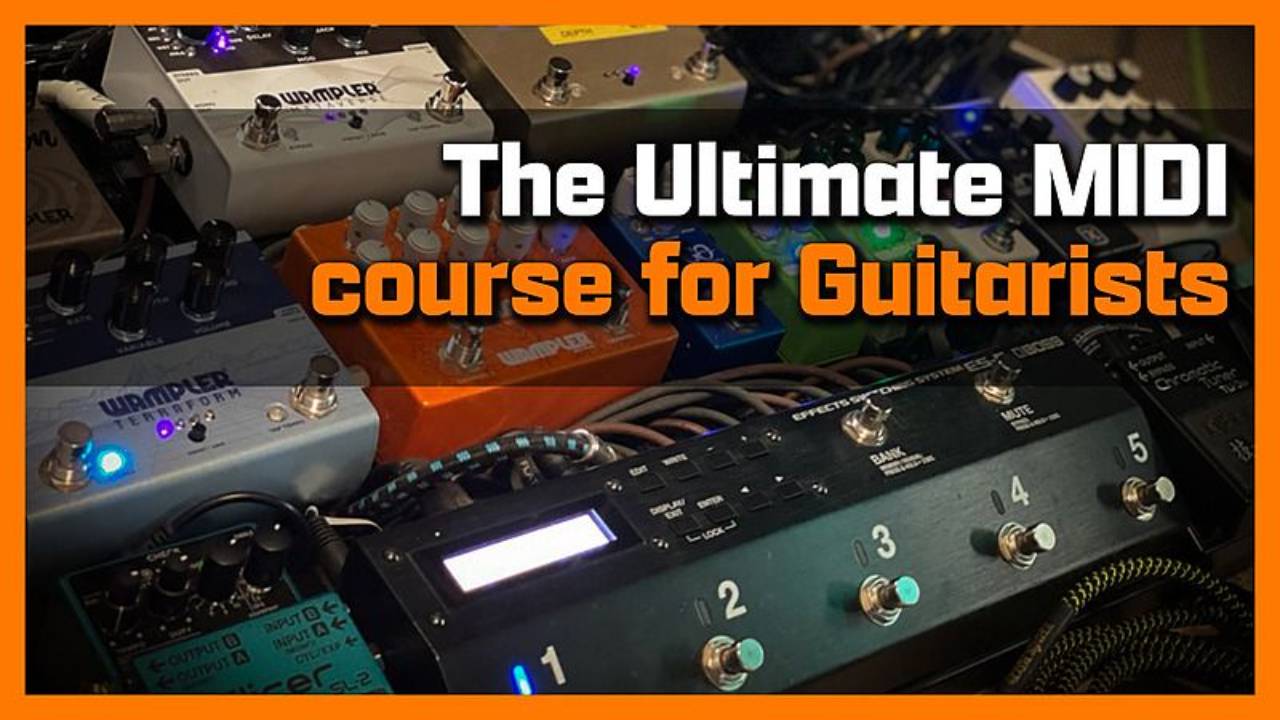
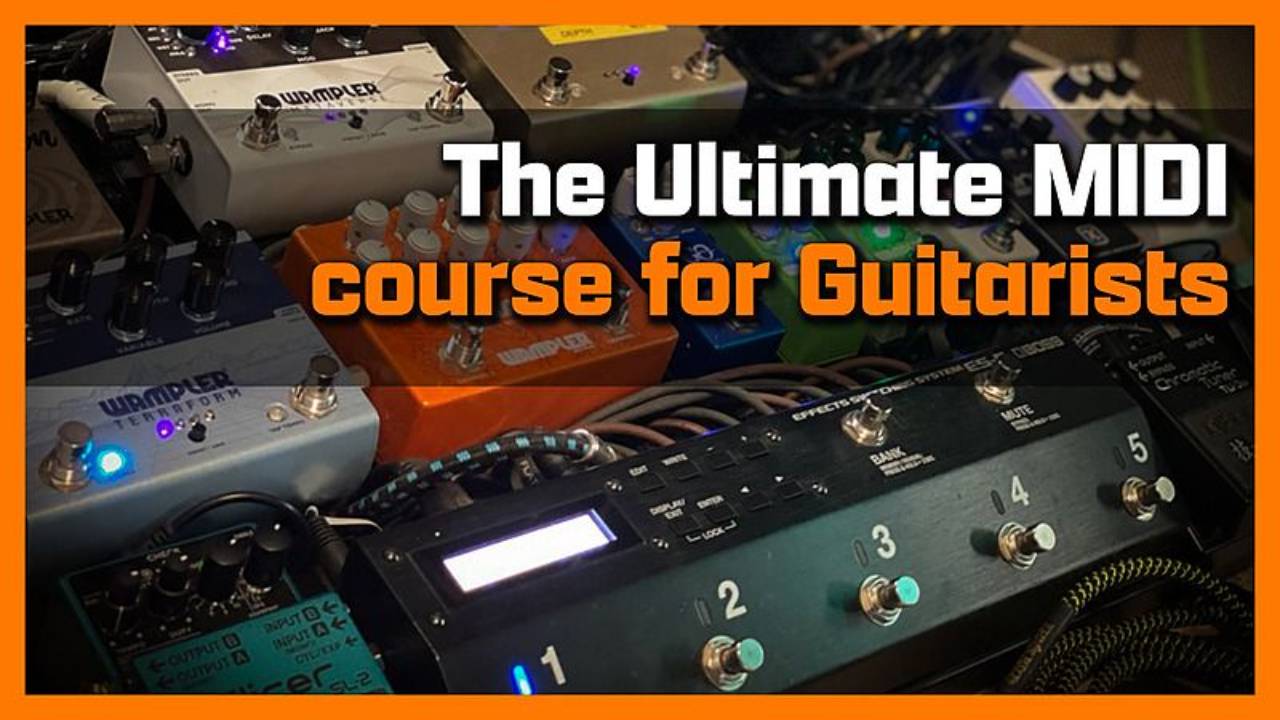
The Ultimate MIDI Course For Guitarists
-
Section 1: Why MIDI Isn't Actually Complicated
4 lessons- Introduction to MIDI For Musicians
- What is MIDI and Why Should You Care?
- The Power of Omnichannel Mode & Understanding Connections
- Quiz - Why MIDI Isn't Actually Complicated
-
Section 2: Building Your First MIDI Setup
3 lessons- Building Your First MIDI Board
- Adding an Extra Pedal
- Introducing a More Capable Controller – Live Logic
-
Section 3: Controlling Every Effect Individually With MIDI
4 lessons- All About MIDI Channels
- Program Change (PC) Messages
- Control Change (CC) Messages
- A Complete Board Using PC and CC Messages
-
Section 4: Advanced MIDI Control Techniques
3 lessons- Introducing Expression Pedals
- Expression Pedals and Pitch Shifting
- Using MIDI with Amplifiers
-
Section 5: Build A Dream Rig (Professional-Level Control)
3 lessons- Introducing the ES-5 and the Concept of MIDI Clock
- Pedalboard Build with the ES-5
- ES-5 Patch Structure
-
Section 6: Troubleshooting & Maintenance
2 lessons- Recap and Basic Troubleshooting
- Final Thoughts
Finally: MIDI Taught by a Guitarist, for Other Guitarists
Every other MIDI resource was created by studio engineers or synth players. They’ll teach you about DAWs and sequencers and “128 velocity values” until your brain melts.
This course? Filmed on real pedalboards. With gear you recognize. Solving problems you actually face.
Built by a guitarist who’s been in those exact nightmare gigs where everything that could go wrong, did.
No programming. No software rabbit holes. No spreadsheets full of CC values.
Picture it: One stomp. BAM! Your delay switches to dotted eighth, reverb jumps to shimmer, Tube Screamer kicks in, and your amp hits the lead channel. Four pedal changes, one button press.
Brian Wampler, founder of Wampler Pedals, Inc., is a well-known name in the world of guitar effects and sound crafting.
Known for his skill in pedal design and his deep know-how of musical electronics, Brian's pedals have become go-to gear for players in all kinds of music styles. From the clear ring of his delay, reverb, and modulation pedals to the rich growl of his overdrives, distortions, and fuzz pedals, the Wampler brand stands for top sound quality and a wide range of tones.
But Brian's passion for great sound doesn't stop at just making pedals. Knowing that musicians at all levels need to understand how to get the best guitar tones, Brian has started offering educational courses. These courses cover everything from the details of analog vs. digital sound to how to shape the right tone for different types of music, as well as helpful courses for those looking to start their own MI company, marketing campaigns, and even musical instrument based Youtube channels.